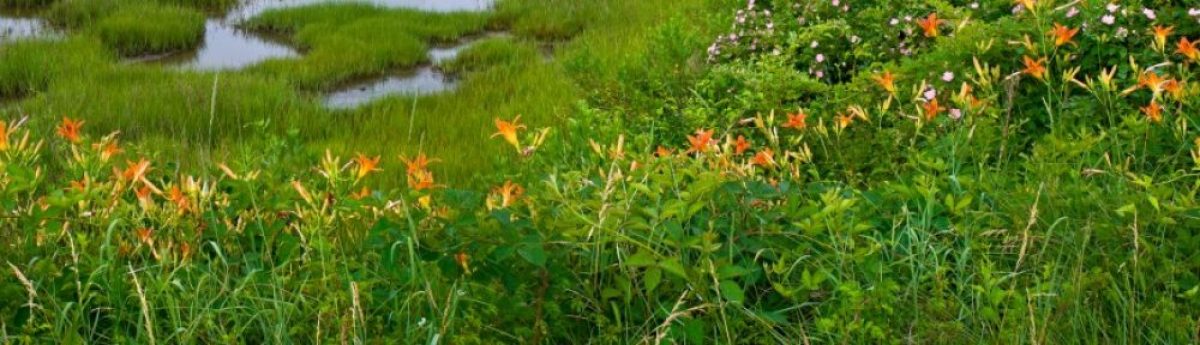
Stepping outside this evening, I was unexpectedly greeted by the lingering fragrance of honeysuckle climbing through the lilacs. The garden, at the end of May, seemed briefly suspended between bloom and fading.
Twilight and the Scent of Honeysuckle twilight— the scent of honeysuckle fills the lavender air, lilacs and dogwoods sing their last notes of song— twilight— the scent of white peonies intoxicates, while yellow and purple irises are at the tip of bloom, and day lilies await to explode in tangerine madness— twilight— at the end of May in my garden suspended between blossom and fading
Almost April — there is a moment just before spring fully arrives, when nothing seems to have changed, and yet, everything has already begun. Almost April when crocuses, aconites speckle colors on frigid earth, and buried bulbs unfurl their green fingers — Somewhere a cold cauldron sits atop a flame, warmth simmers: imperceptible as approaching dawn. Almost morning: when softest tones tiptoe through purple darkness, and wakening lark arises in radiant song, ruptures daybreak deafness. Almost laughter
— D. G. Vachal This poem is from my collection The Turning of Light a book that follows the quiet unfolding of the seasons within and around us. If you’d like to explore the full collection:
The Turning of Light Image (public domain): William J. Forsyth (American, 1854–1935), Crocuses, oil on canvas.
The cover of my second poetry book collection, The Turning of Light, features Claude Monet’s luminous painting, Woman With a Parasol, Facing Left (1886), one of the most beloved images of the Impressionist movement.
In the painting, Monet captured more than a woman standing in a field. He captured a moment of living light — clouds drifting across the sky, wind moving through tall grass, and sunlight shifting across the landscape.
Nothing in the scene is still. Light moves, the sky changes, and the moment itself seems to pass even as we look at it.
That quiet transformation of light lies close to the spirit of the poems in TheTurning of Light, which follow the turning of the seasons and the subtle ways time reshapes memory, love, and the inner life.
Never was a month so motley in its days: November, penultimate month of a year that frames the seasons, when leaves in early days turn to brightest garnet, blazing topaz, illuminated gold —
the latter days arrive
with the fire of the winds, and the burning leaves take the plunge from infernal towers of the branches to the burial grounds of a gun- metal, brumal earth —
November, November, calves ache from the marathon, hearts pound the door to another December
when holly berries huddle upon the petals
of the soft-spoken snow,
and the fallen leaves breathe again
at the sound of the carols of the children,
the children rejoicing.
The turning of colors like the turning of tides, the waxing moon’s gradient shift to fullness in pearlescent light, the chilly air’s osmosis imperceptible, permeating a blanket of warmth —
emeralds turn to topaz, malachite to rubies, nightingale songs grow faint as in a moment’s dream —
I was here many times before and once again I am
swept in this lunatic array of colors: salmon and salamander, citrine and vermilion, french horns and trombone, a cacophony of shades and tinctures —
these moments soon will pass like many times before yet for a little while let me wrap myself in the colors of Autumn: Joseph’s coat of many colors.
Author’s note: This poem was inspired by a passage from “The Strings are False” by the Irish poet Louis MacNeice.
“The train for Jersey City was called the Blue Comet and I sat in a luxury Pullman car that was all windows and beyond the windows a reel of autumn madness, the maple trees gone drunk with colour. Tigers and wine, pimento, copper, coral, the bells of St. Clement’s jangling and fanfaronade of trumpets, fireworks out of the ground, Giorgione, Veronese, the tents of all the Sultans. People had told me about the American Fall, and this was it.” (“Louis MacNeice, The Strings are False, Faber and Faber Limited, Great Britain, 1965, p. 30.”)
You must be logged in to post a comment.