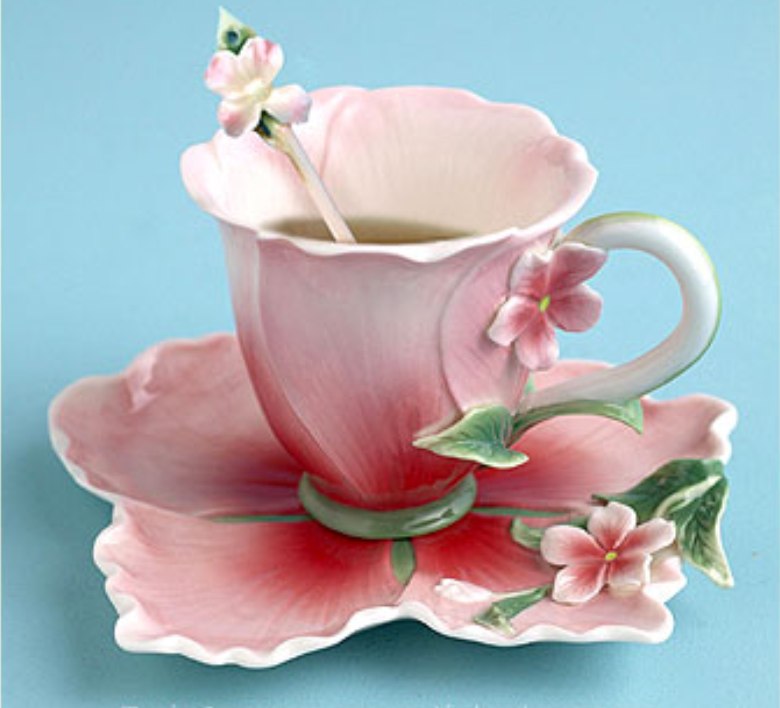
“Porcelain Morning”


Porcelain Morning

Kinder still the porcelain morning:
kaolin clay
baked in the kiln of the evening
sun,   cleansed
of the dross of darkness,
translucent resonance,
impermeable
white.

Pink peonies await
and the glossy leaves —
choose your colors,
paint
with care.

by D. G. Vachal © 2013

*** image by TTor

Of Sparrows, Swallows, and Altars

Group of Sparrows by Jimmy Palma Gil
Of Sparrows, Swallows and Altars

 “Yea the sparrow hath found an house, and the swallow a nest for herself, where she may lay her young, even thine altars, O Lord of hosts, my King and my God. Blessed are they who dwell in thy house: they will still be praising thee. Selah. ”  Psalm 84:3

Endowed with the gift of flight, birds have such freedom of motion that they are capable of traversing thousands of miles across continents, soaring to the heights of the skies, plunging to the lowest depths of earth’s dry places.  These creatures possess the rare liberty of pushing the limits of height, depth and distance.

In much the same way, on a grander scale, mankind is gifted with these capabilities.  But inherent in this sense of latitude is a kind of restlessness and constant movement, of migrations prompted by the search for food and shelter and climates of well-being,  a sense of fear of things and circumstances beyond one’s control.

King David likens his soul to the restless, homeless creatures of flight that have finally found a dwelling place in God’s house. He declares that those who find their rest in God are blessed, whose hearts are full of praise.  And that happiness stems from knowing God.

In this psalm, there is a designated place for approaching and knowing God — “even thine altars”, referring to the Altar of Burnt Offering and the Altar of Incense in the Old Testament. 

There is a new and living way to know and find God, to come to the altars that God Himself has appointed: the shed blood of His own Son Jesus Christ upon Calvary’s cross for the remission of our sins and shortcomings.  The Great High Priest of the Altar of Incense is the Person of Jesus Christ Himself, who is the pathway  to our Heavenly Father.

As the sparrow found a house, and the swallow, a nest to lay her young, it is at the altars, it is in and through Jesus Christ that our souls find true happiness, rest, and fulfillment of purpose in this life and beyond.

*** Photography by Jimmy Palma Gil

“Where is Your Faith”?

“Where Is Your Faith?”

“And they came to him, and awoke him, saying, Master, Master, we perish. Then he arose, and rebuked the wind and the raging of the water: and they ceased, and there was a calm. And he said unto them, Where is your faith? And they being afraid wondered, saying one to another, What manner of man is this! for he commands even the winds and water, and they obey him.
Luke 8:24-25

The Gospels talk about a great storm that arose while Jesus and His disciples sailed across the Sea of Galilee. After being awakened by the terrified men, Jesus rebuked the wind and the raging waters, and immediately, there was a great calm.

Jesus was astonished at the state of mind of His disciples in the midst of the storm: He asked them one pointed question: “Where is your faith?”  The Lord’s question seems to imply that He knows they have got faith, but where was it at the moment?  And this question gives us a key to understanding the nature of faith.

Faith transcends ordinary human reaction, and hence it is not automatic, nor is it a result of reflex thought or action; it is not a matter of feelings alone, but encompasses the whole person, which includes the mind, intellect and understanding.   Faith is an activity that must be consciously put into operation. It is a response to truth.

How do we put faith into practice?

The first thing we must do when we find ourselves in extreme difficulty is to refuse to allow ourselves to be controlled by the situation at hand.  Faith is a refusal to panic.  The disciples panicked in the storm,  with the cold, strong winds tossing their craft, the waters flowing in, and they thought they were going to drown and perish. They allowed their predicament to control them, instead of applying their faith and taking charge.

The second step to applying faith is to remind ourselves as Christians of what we believe in and what we know.  If the disciples had only considered that Jesus was with them, the same Jesus who turned the water into wine, healed the blind and the lame, raised the dead, fed thousands, and performed many other miracles, they would not have feared.  Faith grasps on to the truth and reasons what it knows to be truth.

But there is value even in the weakest faith.  With their little faith, the disciples did the right thing in the end.  They eventually went to Jesus, knowing that He was able to do something about the threatening  situation at hand.

Each of us has been given a measure of faith, and should we find ourselves in the midst of trials and testing, let us take it as an opportunity to put our faith into action, to make our faith clearly manifest, to bring glory to our Lord, as we live our lives on earth.

Reference: D. Martyn Lloyd-Jones, Spiritual Depression, Lowe and Brydone Printers, Ltd, Glasgow, Great Britain, 1965, pp. 134-147.

Image: Christ on the Sea of Galilee, Painting by Eugene Delacroix, circa 1854, in the public domain, courtesy of Wikipaintings.org

The Tea Cup of Today

“This is the day that the Lord has made; let us rejoice and be glad in it.”  Psalm 118:24

 In the midst of a frenzied afternoon at work today, I paused to read an email from my daughter Amy:

“I’ve been thinking about this quote a lot lately:  “This is the day that the Lord has made. Let us rejoice and be glad in it.”  The last two words, “in it”, are what have me thinking. The phrase makes it seem like it’s a special place – a porcelain cup, specially made, specially prepared – to rejoice, to revel, to live fully in — when you are in something like a cup of tea, surrounded.”

Any given second, any given breath, we are within the walls of a day. We can’t see tomorrow – and so we can only treat it with what we can’t see – with hope (but how great is our hope when we think about Jesus)? We see only today, and our hands, and our feet, and our loved ones, and whatever else God has given us for today. “

What Amy wanted to tell me is that today is not only a special time, but a unique and wondrous place designed by God for us to live and breathe in.

The porcelain tea cup of today.

I smile at the thought of today and of pink porcelain cups.

by D. G. V.

*** Author’s Note: this link leads to a poem I wrote for my daughter Amy.

From a Slow Heart to a Burning Heart

And they said to one another, “Did not our hearts burn within us while He talked with us on the way and while He opened to us the Scriptures?” Luke 24:32

On Resurrection Day, two men’s hearts were changed on the road to Emmaus.  At the outset, when Jesus met them on their journey, He described them as “fools and slow of heart to believe”.

They were men who had slow, sluggish hearts:  so engulfed were they in recounting the terrible things that happened to Jesus two days before, mulling over how He was crucified and put to death by the chief priests and rulers.  Jesus, the One they thought would redeem Israel from all her enemies and woes, the earthly Messiah who would bring peace and prosperity to their homeland. Now their hopes were demolished.

They had a different vision and all they deliberated upon was Christ’s misfortune, overlooking what they had heard that very same day, that early in the morning, certain women went to the sepulcher, saw a vision of angels and an empty grave. Slow and heavy hearts dwell upon the worst things that have happened and never get past these events.

As Jesus walked with them and discussed the Scriptures, starting from Moses and all the prophets, slowly a kindling in their hearts began, and around sunset, when they approached Emmaus, their hearts were burning … “Were not our hearts burning within us while he talked with us on the road and opened the Scriptures to us?

What a tremendous transformation, such that after Jesus disappeared from their midst at Emmaus, “on the same hour”, they excitedly headed all the way back to Jerusalem, to walk another seven miles, in the darkness of evening, to be with the eleven apostles.  They could not contain themselves, they had so much fire within them, their hearts were raging to deliver one message: “The Lord is risen indeed”.

Hearts slow to believe were transformed to quickened, burning hearts of faith when Jesus walked with them, talked with them, and opened the Scriptures to them.