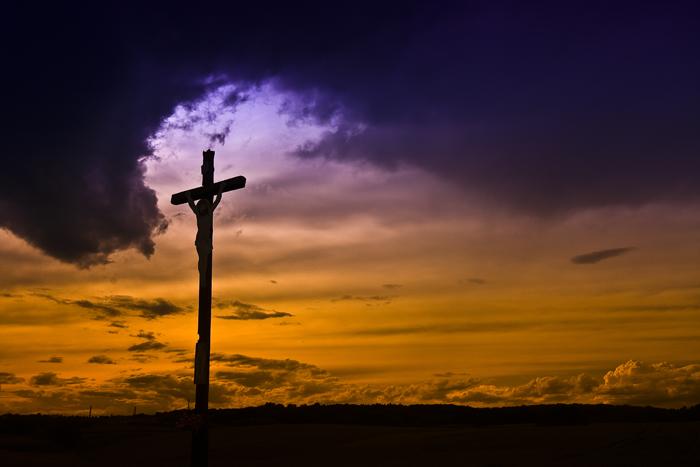

The Sorrow of Forsaking Christ

Then Jesus, looking at him, loved him, and said to him, “One thing you lack: Go your way, sell whatever you have and give to the poor, and you will have treasure in heaven; and come, take up the cross, and follow Me.”  But he was sad at this word, and went away sorrowful, for he had great possessions.” Mark 10:21-22

Can great worldly possessions cause sorrow?  A wealthy young ruler’s encounter with Christ left him grieving because of the choice he made.

At the outset, he came running to Jesus, knelt by Him, and asked what he must do to inherit eternal life.  Here was a man who seemed to possess everything in life: he was noble and excellent, and yet he felt that something was missing. There was this concept of eternal life which gave him a curious desire to attain.  He sensed the urgency. He came running.

He asked the right question, but when Jesus gave him the answer, he walked away.  Why did he give up his pursuit of eternal life?

He expected Christ to confirm his own preconceived notions about the Kingdom of God. The Lord demolished his understanding.  Attaining eternal life is not simply a matter of following God’s commandments; it demanded something else. Christ probed into the very depths and center of his being and exposed his real dilemma: his trust in riches, his pride and confidence in them.

”Give it away”, says Christ, “and let me decide.”  The kingdom of God must be entered Christ’s way. It is a radical transformation, the way of the cross, of following in Christ’s footsteps.

He did not like Christ’s answer. He walked away, deciding to hold on to his possessions and the life he was accustomed to. But in leaving, he was sorrowful. A deep heaviness engulfed him as he opted for worldly riches over eternal life, as he walked away from Christ.

Judas turned his back on Christ and was filled with such remorse and sorrow that he took his own life.  To abandon Christ is spiritual suicide, to turn away from eternal life, from the only one who can give true riches, happiness, joy and peace.

Oh do not walk away from Christ! If you leave Him, you will have left your last and only hope, and nothing else remains but grief and eternal unhappiness. Run towards Him, embrace Him, and never let Him go.

*** Reference: Martyn Lloyd-Jones, “The Kingdom of God”, Crossway Books, Wheaton, Illinois, 2010, pp. 155-172.

*** Photography: After Sunset by Andrew Koksharov

From a Slow Heart to a Burning Heart

And they said to one another, “Did not our hearts burn within us while He talked with us on the way and while He opened to us the Scriptures?” Luke 24:32

On Resurrection Day, two men’s hearts were changed on the road to Emmaus.  At the outset, when Jesus met them on their journey, He described them as “fools and slow of heart to believe”.

They were men who had slow, sluggish hearts:  so engulfed were they in recounting the terrible things that happened to Jesus two days before, mulling over how He was crucified and put to death by the chief priests and rulers.  Jesus, the One they thought would redeem Israel from all her enemies and woes, the earthly Messiah who would bring peace and prosperity to their homeland. Now their hopes were demolished.

They had a different vision and all they deliberated upon was Christ’s misfortune, overlooking what they had heard that very same day, that early in the morning, certain women went to the sepulcher, saw a vision of angels and an empty grave. Slow and heavy hearts dwell upon the worst things that have happened and never get past these events.

As Jesus walked with them and discussed the Scriptures, starting from Moses and all the prophets, slowly a kindling in their hearts began, and around sunset, when they approached Emmaus, their hearts were burning … “Were not our hearts burning within us while he talked with us on the road and opened the Scriptures to us?

What a tremendous transformation, such that after Jesus disappeared from their midst at Emmaus, “on the same hour”, they excitedly headed all the way back to Jerusalem, to walk another seven miles, in the darkness of evening, to be with the eleven apostles.  They could not contain themselves, they had so much fire within them, their hearts were raging to deliver one message: “The Lord is risen indeed”.

Hearts slow to believe were transformed to quickened, burning hearts of faith when Jesus walked with them, talked with them, and opened the Scriptures to them.


Knowing God Through His Name

I have manifested thy name unto the men which thou gavest me out of the world: thine they were, and thou gavest them me; and they have kept thy word.” John 17:6

Knowing a person’s name is the first step in human relationships.  A name is powerful because it is the expression of a person’s unique identity, the embodiment of  his very essence, attributes, and character.

In the Old Testament, God revealed Himself through His name.

We first encounter a class of names in the Bible pertaining to God: “El, Elohim, El Shaddai, El Elyon”, referring to “the strong and mighty One”.  So the first thing we need to know about God is to realize His absolute might, strength and power.  He is God Almighty, there is no limit to His power.  He is the Creator,  originator, and sustainer of everything that exists.

The name God revealed to Moses was the great name Jehovah, which in Hebrew is represented by the four letters YHWH.  It means the self-sufficient and self-existent One from eternity to eternity, the One who increasingly reveals Himself to His people.

Jehovah is the name of God in His relationship to mankind. The God of eternity and glory takes the first step to reach down to humanity, in spite of all its sins and shortcomings. Other names are appended to the name “Jehovah”,  and in these various names are incorporated God’s promises to His people.

Jehovah-Jireh: “The Lord will provide”.  In our deepest needs, when we come to God in prayer, we are to remind ourselves that the Lord has promised to provide.

Jehovah-Rapha: “The Lord who heals”.  God has the power to heal us of our diseases, and most of all the power to heal us of the ultimate disease, sin itself.

Jehovah-Nissi: “The Lord our banner”.  God enables us to obtain victory over foes in this life.

Jehovah-Shalom: “The Lord our Peace”.  When we are in the midst of turmoil in our lives, we can go to God because He has promised to give us peace.

Jehovah-Ro’eh: “The Lord is my Shepherd”.  Because He is our Shepherd, we shall not want.

Jehovah-Tsidkenu: “The Lord our Righteousness”.  God is the source of our righteousness, and not we ourselves.

Jehovah-Shammah: “The Lord is always present”.  God is always with us, throughout all our experiences in life, especially during times of trouble.

These then are the attributes of God. But yet in spite of the revelations of His name, mankind still could not really know God. This is because there is no true knowledge of God except in and through Jesus Christ.  He is the way, the truth and the life, and no one comes to the Father except through Him. (John 14:6)

Through Christ we come to realize that God’s name is ultimately Love, as He has loved us with an everlasting love. And by knowing God as love, we can appropriate for ourselves the gracious and precious promises  embodied in His name, among them are His provision, healing, victory,  peace, and His loving and abiding presence in our lives.

*** Reference: Martyn Lloyd-Jones, Safe in the World, The Assurance of our Salvation, Crossway  Books, Illinois, 1988, pp. 44-54

*** Photography: Tree of Light by J. Philipson

The Cross that Reconciles

“For Christ himself has brought peace to us. He united Jews and Gentiles into one people when, in his own body on the cross, he broke down the wall of hostility that separated us.” Ephesians 2:14 NLT

A long time ago, a young man died a violent death, leaving His followers devastated.  That young man was Jesus Christ, the Son of God, who rose triumphant from the grave, whose death on the cross is the only real hope for a lost and fallen humanity.  In a world full of division, hatred and wars, it is the cross of Christ alone that can bring about true unity and peace among men.

Pride is at the root cause of these hostilities, and it takes many forms.

People take pride in their birth and race, deeming themselves superior to others who are not like them.  There is also pride of possessing power which causes tension between the “haves” and the “have nots”, the employer and the employed, those who govern and the governed, among other things.  There is pride of intellect which causes the separation between the “Greeks and barbarians”, the wise and the unwise, the educated and the uneducated.

Peace involves love, sympathy and understanding, but the world is incapable of producing true peace because the problem is in the heart of man, not his mind. Pride is a formidable power in this world, and none of man’s own inventions can deal with this problem.

The only thing in the world that can bring peace and unity among men and women is the cross of Christ.  How is this accomplished?

First, the cross shows us the reality about ourself.  We are prideful beings, thinking we are always right and it is always the other person’s fault.  But the cross of Christ humbles us when we consider why Christ came into the world.  He came because we cannot save ourself, He came “to save that which was lost”.  The cross tells us that we are complete failures who have missed the mark, and that Christ came to die on the cross so that we can be made right with God.

Second, the cross reveals to us the truth about others.  The cross shows us that other people also have souls, and that it does not matter what the color of their skin is, their economic status or level of education, we are all alike. We all have sinned and come short of the glory of God. We are one in sin, in failure, in hopelessness and helplessness.

The cross unites us in every respect.  In our failure and helplessness, we receive the same forgiveness, being equally made the children of God, sharing the same divine life. We rejoice in the same Redeemer who has broken down the middle wall of partition between Jew and Gentile, who has torn down the barrier between us and our fellow human beings.

God forbid that we should boast about anything, except in the death on the cross of our Lord Jesus Christ.

* Reference:  Martyn Lloyd-Jones,  The Best of Martyn-Lloyd Jones, 1992, Baker Books, England, pp. 85-107

* Photography by Jean Winters Olkonen