Elements of Joy

“And these things write we unto you, that your joy may be full.” I John 1:4

What is joy? It is a difficult concept to define precisely, however I came across a discussion by Dr. Martyn Lloyd-Jones on certain elements that constitute joy:

The first element is that of a state of complete satisfaction. It is an all-encompassing feeling of fulfillment — mind, heart, emotions and desires.  Dr. Lloyd-Jones says that this is an essential part of joy.

The second element of joy is “a spirit of exultation”.  Dr. Lloyd-Jones portrays a child happily playing with his toy, and then someone comes along and gives the child a surprise: the child springs to his feet in glee; “there is a brightness, a flush which is exultant”.  Joy is more active: there is a “positive spirit of exultation and rejoicing”.

The third element, Dr. Lloyd-Jones suggests, is “a feeling of power and of strength.  There is nothing flabby or superficial about it. Joy is one of the strongest powers in the world. When you are truly joyful, you are wound up by some mighty dynamic power; you feel strong, you are lifted up above yourself, you are ready to meet every enemy from every direction and quarter.”

Dr. Lloyd-Jones admits that the above elements  constitute an inadequate description of joy, but it is difficult to describe it any further.  He concludes his outline of joy by these words:

“Joy is something very deep and profound, something that affects the whole and entire personality.  In other words, it comes to this; there is only one thing that can give true joy and that is a contemplation of the Lord Jesus Christ.  He satisfies my mind; He satisfies my emotions; He satisfies my every desire.  He and His great salvation include the whole personality and nothing less, and in Him I am complete”.

“Joy, in other words, is the response and the reaction of the soul to a knowledge  of the Lord Jesus Christ” – Dr. Martyn Lloyd-Jones


*** photography by George Thomas

The Path of the Righteous

But the path of the righteous is as the dawning light, That shineth more and more unto the perfect day.  Proverbs 4:18 ASV

Our journey through life offers a myriad choices of roads to follow. The Bible says that there is a path, an illuminated highway where each step forward brings heightened clarity to our surroundings as well as our destination.  It is the path of the righteous.

Righteousness simply means being right with God.  To this end, we can never achieve this on our own because we are sinful and morally imperfect, whereas God is perfectly holy; a vast divide between God and man exists.

But God in His infinite Love sent a Bridge across the deep chasm of separation: God’s only begotten Son, Jesus Christ, Who came into our sinful world as a man, to be one of us, to dwell among us, feel our hungers, our joys, our sorrows.

Jesus Christ, the Lamb of God, was the ultimate sacrifice, Who bore all our sins and sicknesses in His body on the cross —  the consummate act that made a way for us to be right with God .  Through faith in Jesus that He accomplished this righteousness for us, and not by ourselves through our good works, we obtain our “right standing with God”, and the free gift of salvation and eternal life.

We have the choice to follow the shining path of the righteous or walk the other way.

MyFreeCopyright.com Registered & Protected

The Christ The World Despises

He is despised and rejected of men; a man of sorrows, and acquainted with grief: and we hid as it were our faces from him; he was despised, and we esteemed him not.”  Isaiah 53:3  KJV

From the book “God Calling”,  by Two Listeners, ed. by A. J. Russell:

That these words strike a note of Beauty in the hearts of those attuned to hear the Beautiful, shows truly that the heart recognizes the need for the Man of Sorrows. That it sees nothing contemptible in One despised by the world. That it recognizes the vast difference between the values of Heaven, and those of the world. Fame and acclamations are accorded to earth’s great, contempt and rejection to the Son of God.

One of the things My disciples must ever seek to do is to set aside the valuation of the world, and judge only according to the values of Heaven. These are not for you.  Do not seek the praise and the notice of men. You follow a despised Christ. See the mob is hooting, throwing stones, jeering, and yet in that quiet little throng there is a happiness and Joy the reviling crowds could never know.

Follow that little throng with stones and gibes, and it appears to be of men, mean, ludicrous, contemptible.  Be one of the throng, and you feel the Majesty of God in the presence of Him, Who was despised and rejected of men. Wreaths around His Brow, and shouts of applause, would belittle that Majesty.

In your dark hours, when human help fails, keep very close to the Man of Sorrows. Feel My Hand of Love press yours in silent but complete understanding. I, too, was acquainted with grief. No heart can ache without My heart aching too. “He was despised, and we esteemed Him not.”

* Note: The content in this post is not by the author of this blog, but is derived and quoted from the book  “God Calling”, ed by A. J. Russell
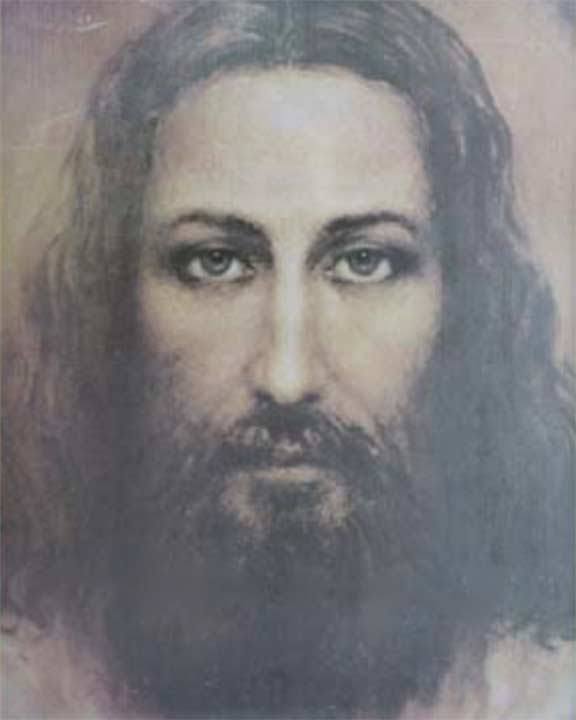
* picture of Jesus from http://www.angelfire.com/rnb/ocean/

The First and Foremost Love

And thou shalt love the Lord thy God with all thy heart, and with all thy soul, and with all thy mind, and with all thy strength: this is the first commandment.” Mark 12:30

Love is a command. Astounding.  How can love be a by-product of a command? A command to obey seems sensible, but a command to love?  I did not hear an explicit command to love my children when they were born;  love for them came naturally to me as breathing and blinking my eyes.

But the kind of love being “commanded” here goes beyond all dictionary definitions. It is a love that is to be practiced by all of my heart, soul, mind, and strength, permeating every warp and woof of my being.  This is the first and foremost directive. Jesus says in Matthew 22:37 that “this is the first and great commandment.”  The great commandment.

Even more astounding when I consider Who gives this command: God Himself.  He commands me to love Him with every fiber, every imaginable strength I could muster, with all of my heart, soul and mind.  God commands me to love Him.

But even if I were not commanded, I do love God; however, the kind of love I possess has to go several steps further — to follow the commandment as directed, to love God with the totality of my being.    As God loves me, I am to love Him.

I believe the great commandment is about the quality of my love for God. The most important concern in my life, therefore, is my love relationship with God.


MyFreeCopyright.com Registered & Protected

Men As Trees, Walking

23And he took the blind man by the hand, and led him out of the town; and when he had spit on his eyes, and put his hands upon him, he asked him if he saw ought.  24And he looked up, and said, I see men as trees, walking. 25After that he put his hands again upon his eyes, and made him look up: and he was restored, and saw every man clearly.
Mark 8:23-25 King James Version

The healing of the blind man at Bethsaida illustrates a miracle of Jesus that was not instantaneous, but unfolded as a two-stage process.  There is a marked difference in the healing of another blind man Bartimaeus of Jericho just two chapters away in Mark 10, who immediately received his sight.

Why the variation in the healing method? It was not because of the lack of  Jesus Christ’s powers that the healing was not immediate. It could be surmised that in the first instance, the blind man did not personally ask Jesus to heal him – other men at Bethsaida brought him to Jesus, requesting for the blind man’s healing; however, this may not be the reason for the two-step healing process because in another miracle, a paralytic whose friends brought him to Jesus was healed instantly. One can only infer that the Lord had a message to illustrate — that this particular miracle was a parable in itself.

What is significant here is that Jesus led the blind man out of the town, and it was outside Bethsaida that Jesus initiated the healing process.  It was a personal, one-on-one encounter with the Son of Man.

After Jesus first put His hand on the blind man’s eyes, Jesus asked him what he saw.  The blind man answered,  “I see men as trees walking”.  It required a second touch from Jesus for the blind man to be fully restored to see every man clearly.

The metaphor that is often described here is that of getting to know God and having one’s spiritual “blindness” healed — to be able to discern the truths of God’s Kingdom more clearly.  A lot of expositions on this subject refer to the first step of this healing process as a “lack of clarity” in the perception of spiritual truths. This is the stage when, after an encounter  with “The Way, The Truth and The Life”, the darkness dissipates; however, one’s comprehension of the Truth is still very much blurred and indistinct, leading to uncertainty and double-mindedness.

The saving grace of the blind man at Bethsaida was his honesty.  He could have told Jesus that he was fine, and went on his way, half-cured.  Not only his honesty, but his desire to see more precisely was what made him whole.

It is thought-provoking that the first object of vision after the first touch of Jesus was that of men.  “What do you see?” That was what Jesus asked the man.  The man from Bethsaida could have mentioned other objects that he saw: the pebbles on the road, the animals, plants,  flowers, even his own hands and feet; however, he straightaway focused on other people.  When he was unable to see, how he must have longed to see other people’s faces, their expression as they talked, laughed, or cried.  After the first touch of Jesus, he listened for sounds where the people were, and set his eyes upon them.   But how did he know what trees looked like?  How did he make the resemblance? Perhaps by touching trees, or through other people describing trees to him.  But he was confused. Trees were supposed to be stationary while men were mobile; his blurry vision identified men with trees.

Trees are tall, rigid and upright.  The man must have been kneeling before Jesus because it is described that he “looked up” after the first touch.  It was a daunting sight for the man: other men, like trees, loomed large (appeared imminent in a threatening, magnified form .. dictionary.com)  But that did not look quite right to him. He was not satisfied with the fuzzy images, the blurriness and the shadows that he saw. He wanted to see men as they really were.

After the man’s response, “Jesus put His hands again upon the man’s eyes and made him look up, and he was restored, and saw every man clearly”.

What do you see? As Jesus asks, “Do you see as you ought to see?”  Do you see clearly, do you know where you stand in your relationship to God and man, or is there uncertainty, vagueness, or double-mindedness?  Are you on fire for the things of God, or are you  neither hot nor cold?  If your vision is blurry,would you be honest to admit this?  If so, then draw near to Jesus and have Him touch you again so you can be at the place where God wants you to be — not in a state of confusion, brokenness and uncertainty, but rather healed, made whole, and “seeing each man clearly”.

*** Photography by James Insogna — jamesinsogna.com

MyFreeCopyright.com Registered & Protected