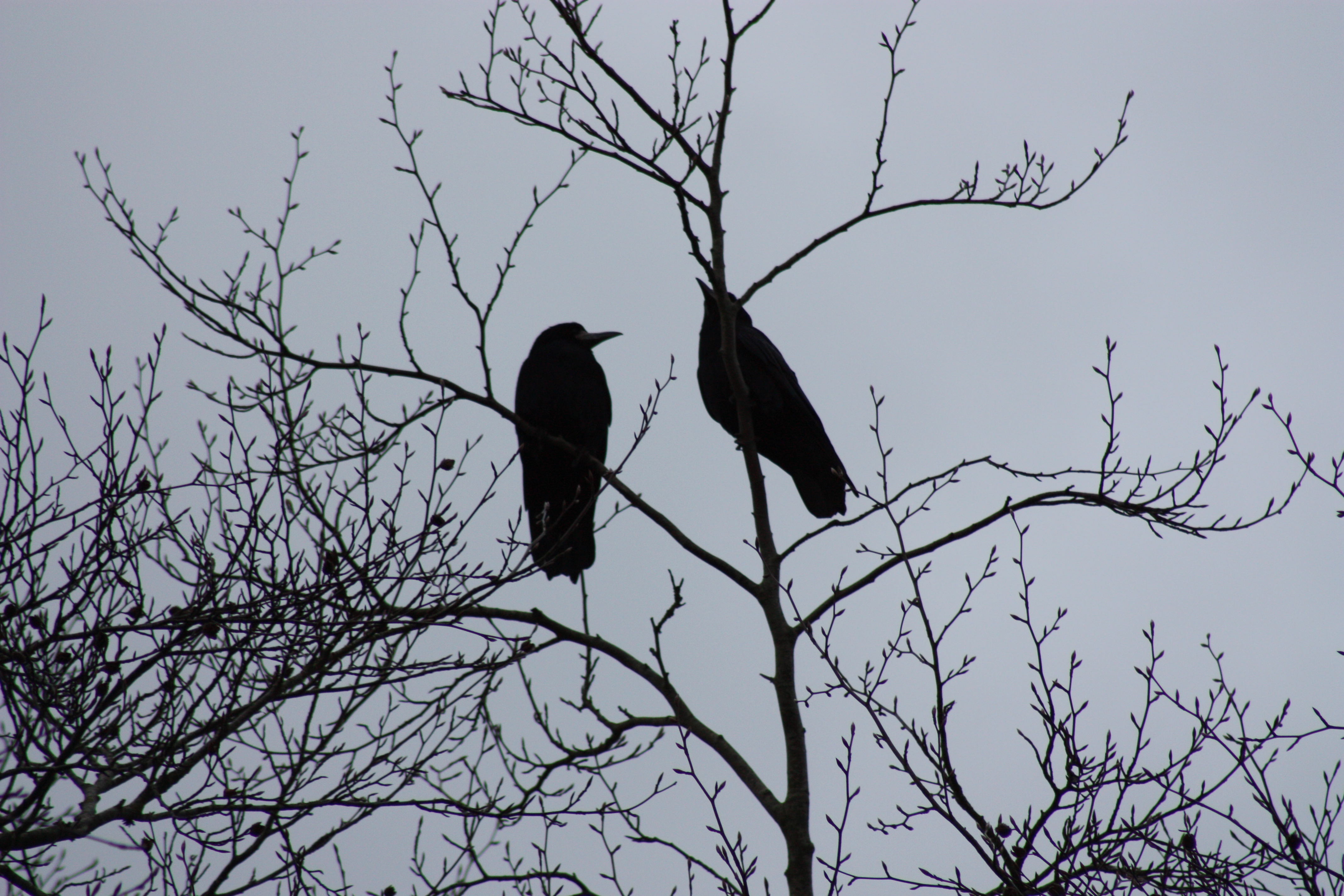
“The Edge of Bloom”

Rookery at John Street Wikimedia Commons 2
The Edge of Bloom

Almost, at this moment:
no matter how feeble the light
upon the trees,
despite this night benumbed,
there are buds that tiptoe
at the pinnacle of jagged cliffs,
careening
at the edge
of bloom —

this miracle,
this dance of beauty
cannot be halted,
cannot be restrained.

by D. G. Vachal © 2013

*** Image by Wikimedia Commons

“Rock, Sand, and Storms”

Rock, Sand, and Storms

Oftentimes what lies beneath is fundamental, for it determines the final outcome of the visible structure standing on top of  it.  I think of the roots that support the life of plants and trees; I think of the foundation that undergirds the construction of houses and buildings.

Jesus tells a story of two men who built two houses, one upon the rock, and the other upon the sand. One man was wise, the other was foolish. If the teaching we draw from this story is that the difference between these two men and two houses is revealed when the storms of trials come, the lesson would have little value, for it would have been too late to do anything about it.

But Christ’s purpose in telling the story is to enable us to detect the fundamental differences between two principles of living, so that we may be able to safeguard ourselves against the consequences of a false grounding, while there is still time. Hence, the decisions and actions enacted at the very beginning are crucial to eventual outcomes.  It is said that at the outset, the wise man dug deep before building his house, whereas the foolish man did not take the trouble to lay a foundation.

Let us consider the particular outlook of the man who built his house upon the sand:  (1)

First, he was impatient, in a hurry, compelled to take short cuts to achieve quick results.

Second, because he was impatient, he did not take time to listen to instruction, in this case, to the principles involved in constructing a house. He considered it unnecessary, and deemed his ideas better than established methods.

Third, he possessed a mentality of not thinking things through, of not considering possibilities and eventualities.  He wanted a beautiful house in a particular location, and put it up quickly on the sand, without considering the environmental hazards that could topple the house down.

Indeed when the winds and the rains and the floods came, the house built upon the rock stood firm, but the house upon the sand fell, and great was its fall.

Note that this story does not stand by itself:  it is sobering to recognize that Christ relates it to how people handle his teachings.  A house can be thought of as one’s life structure, and all of its related external outgrowths.  Christ claims that putting his teachings into practice is like digging deep and building a sure foundation to enable us to withstand the storms of life.

And Christ likens one who simply hears his words and does not do them, to the man who built his house upon the sand, with a stern prediction of a great fall, when the storms of life arrive.

Scripture Reference:

“Therefore whoever hears these sayings of Mine, and does them, I will liken him to a wise man who built his house on the rock:  and the rain descended, the floods came, and the winds blew and beat on that house; and it did not fall, for it was founded on the rock. “But everyone who hears these sayings of Mine, and does not do them, will be like a foolish man who built his house on the sand: and the rain descended, the floods came, and the winds blew and beat on that house; and it fell. And great was its fall.” Matthew 7:24-27, New King James Version

***(1) Reference on the characteristics of the foolish man:  Martyn Lloyd Jones, Studies in the Sermon on the Mount, Connecticut, Martino Publishing, 2011, pp. 298-299

***Photography by Dmitri Moronov

The Yoke and the Learning

Philippe-Jacques_de_Loutherbourg_-_Landscape_with_Horse_and_Oxen_Cart_-_Google_Art_Project
The Yoke and the Learning

“Come unto me, all ye that labour and are heavy laden, and I will give you rest. Take my yoke upon you, and learn of me; for I am meek and lowly in heart: and ye shall find rest unto your souls. For my yoke is easy, and my burden is light.” Matthew 11:28-30

Could it be that mankind’s burdens of the soul are analogous to the burdens of the beasts of the field, for why would Jesus mention the yoke, when he beckoned us to come to him for rest?

One might wonder about the purpose of the yoke.  At first thought, it may seem an added burden to an animal, but it is just the opposite, for its function is to make the burden light.  The plow, attached to the oxen without a yoke would be onerous, but when worked by means of a yoke, becomes easier to pull.

What is the nature of this “rest” that Jesus talks about?  The writer of Hebrews exhorts the reader to “labor to enter into Christ’s rest”, a seeming paradox; however, rest is not stagnation as in a still lake, but rather entails simultaneous energy and tranquility, as the rushing waters of a river, or the plunging torrents of a waterfall. It connotes physical and mental activity:  toil with the plow and the discipline of learning, but where burdens are light and non-oppressive.

And what is the “burden”?  It is life itself with its difficulties, to be carried from cradle to grave. During his days on earth, Jesus recognized that men and women took life painfully, and this enigma of how to withstand life’s unpleasant onslaughts  is universal.

“Take my yoke and learn from Me,” says Christ. To take Christ’s yoke upon us is likened to an ox, in meekness, subjecting itself to its Master, no longer going its own way;  it goes where the yoke is led.  An act of total commitment.  To learn from Christ is to look at life according to His perspective, teaching and principles.  It is to grasp and comprehend His meekness and lowliness of heart, qualities which banish the scourge of a restless spirit.

Christ’s yoke is easy. The gentle Master is also a skilled Carpenter, who fashions the yoke for a perfect fit, to enable us to carry our burdens with strength. Christ’s yoke is his way of alleviating human life, his prescription for a joyful life in the midst of a difficult world.

There are other yokes and teachers that we can subject ourselves to, but Christ claims that it is his yoke and the learning from him that give rest to our souls, where we can plow through the fields of life more efficiently, and with lighter burdens.

Reference:  Henry Drummond, Pax Vobiscum, 1890, electronic book courtesy of http://www.Gutenberg.org.

Image: “Landscape with Horse and Oxen Cart”, Painting in the public domain by Philip James de Loutherbourg (1740-181), courtesy of Wikimedia Commons.

The Years, My Friend

Winter by Farhad
The Years, My Friend

The years, my friend, have not been kind
upon your marble face,   I hear the river songs
tinkle with the cymbals,
your eyes are shriveled grapes upon the vine,
your mouth a wounded cherry,
pecked reddish-grey
by restless robins.

Take my hand, my friend,
let us go to the calling fields that blaze with diamonds
under the eternal skies,
to the orchards in the midst of these winter days,
where leafless branches stand dauntless
in the endless cold, with jubilant tales to tell
in the blizzard of their days —

harken to the legends
of the root and the bud and the sun,
and the promise
(believe the promise)
that warmth and springtime
will come,
(it always comes)
once again.

by D. G. Vachal © 2013

*** Photography by Farhad

Of Sparrows, Swallows, and Altars

Group of Sparrows by Jimmy Palma Gil
Of Sparrows, Swallows and Altars

 “Yea the sparrow hath found an house, and the swallow a nest for herself, where she may lay her young, even thine altars, O Lord of hosts, my King and my God. Blessed are they who dwell in thy house: they will still be praising thee. Selah. ”  Psalm 84:3

Endowed with the gift of flight, birds have such freedom of motion that they are capable of traversing thousands of miles across continents, soaring to the heights of the skies, plunging to the lowest depths of earth’s dry places.  These creatures possess the rare liberty of pushing the limits of height, depth and distance.

In much the same way, on a grander scale, mankind is gifted with these capabilities.  But inherent in this sense of latitude is a kind of restlessness and constant movement, of migrations prompted by the search for food and shelter and climates of well-being,  a sense of fear of things and circumstances beyond one’s control.

King David likens his soul to the restless, homeless creatures of flight that have finally found a dwelling place in God’s house. He declares that those who find their rest in God are blessed, whose hearts are full of praise.  And that happiness stems from knowing God.

In this psalm, there is a designated place for approaching and knowing God — “even thine altars”, referring to the Altar of Burnt Offering and the Altar of Incense in the Old Testament. 

There is a new and living way to know and find God, to come to the altars that God Himself has appointed: the shed blood of His own Son Jesus Christ upon Calvary’s cross for the remission of our sins and shortcomings.  The Great High Priest of the Altar of Incense is the Person of Jesus Christ Himself, who is the pathway  to our Heavenly Father.

As the sparrow found a house, and the swallow, a nest to lay her young, it is at the altars, it is in and through Jesus Christ that our souls find true happiness, rest, and fulfillment of purpose in this life and beyond.

D. G. Vachal ©2013

*** Photography by Jimmy Palma Gil