The Blessedness of Possessing Nothing

The Blessedness of Possessing Nothing

 Blessed are the poor in spirit: for theirs is the kingdom of heaven.  Matthew 5:3

… a synopsis of A.W. Tozer’s writing

Before God created man, He prepared a world filled with things for man’s use and enjoyment; however, within the depths of man’s heart was a shrine where only God was worthy to inhabit.

With the entrance of sin, a perversion occurred that made those very gifts of God a potential ruin to the soul.  Problems began when God was forced out of His central shrine in the heart and “things” were allowed to enter and control.

“There is within the human heart a tough fibrous root of fallen life whose nature is to possess, always to possess. It covets “things” with a deep and fierce passion. The pronouns my and mine are verbal symptoms of our deep disease.  Things have become necessary to us, God’s gifts now take the place of God, and the whole course of nature is upset by this monstrous substitution.1

 Jesus Christ shone the light on this “tyranny of things” when He called upon His disciples to deny themselves, take up their cross, and follow Him.  “For whosoever will save his life shall lose it: and whosoever shall lose his life for My sake shall find it.” (Matthew 16:25)

There is a “self-life” whose chief nature is its possessiveness, and to allow this adversary to live is to lose everything in the end.  To conquer and relinquish it for Christ’s sake is to lose nothing, but to preserve everything unto life eternal. And the only effective way to vanquish this foe is by the Cross.

Abraham’s heart was put to the test when God asked him to offer his son Isaac for a burnt sacrifice.  By his obedience in not withholding his son, Abraham removed Isaac from the temple of his heart, and allowed God to reign there unchallenged.  He became a man utterly surrendered and obedient to God.

Wealthy in worldly riches, Abraham had everything, yet he possessed nothing. After that bittersweet experience on Mount Moriah, the words “my” and “mine” never again had the same meaning for him; the sense of possession which these words connote was removed from his heart.  Abraham realized that his real treasures were unseen and eternal.

The blessed ones, the happy ones, are those who have renounced every external thing from their hearts, so God can reign there unrivalled. And though free from all sense of possessing, paradoxically, they gain all things because God is their treasure:  theirs is the kingdom of heaven.

Reference:  A. W. Tozer, The Pursuit of God,  in the Public Domain in the United States, Project Gutenberg Literary Archive Foundation, Gutenberg.org electronic book, pp.30-45

 Footnote:  1 Ibid, p. 31

*** Photography by Sergey Ivanov

Finding Rest in a Restless World


Finding Rest in a Restless World

“ Come unto me, all ye that labour and are heavy laden, and I will give you rest.  Take my yoke upon you, and learn of me; for I am meek and lowly in heart: and ye shall find rest unto your soul.  For my yoke is easy, and my burden is light.”  Matthew 11:28-30

One of the greatest needs of mankind is simply just to rest. In spite of the economic and technological marvels of the modern era, never has life been so hectic and restless as it is today.  At the same time, the pursuit of pleasure has intensified like never before, pleasure that gives a false sense of rest, a temporary relief at best.

Into a weary world that is stressed beyond exertion, comes an invitation from Jesus Christ to come to Him for rest.  It is a call to all who labor and are heavy laden with burdens too heavy to bear.  Christ confronts us with an offer:  He will give us the rest we seek. 

But we need to come to Him, and take His yoke upon us. Absolute allegiance is required.  If we are to be yoked to Christ, we are to put ourselves under His instruction and teaching. A yoke takes only two — the teacher and the follower, so to be yoked to Christ is to forsake other teachings, to cleave to Him, and learn from Him.

How does Jesus give us this rest?

First, there is the rest of forgiveness. When we trust Jesus Christ as our Savior, we are justified by faith and obtain peace with God.  When confronted with our past failures, shortcomings and sins that are beyond our own ability to rectify, we have the assurance that Christ has borne our guilt and sinfulness by His death on the cross, and paid the price for it all. He gives us rest from our conscience, rest from within. The rest of forgiveness.

Second, Christ gives us a new life as a result of being born again into the Kingdom of God.  The new birth is not simply a moral teaching or moral effort: it is a miracle wherein Christ gives us His own nature; we become like Him.  Christ gives us the rest that comes with a new nature, a new understanding and outlook in life, and a renewed mind.

Third, Christ promises to give us the Holy Spirit through Whom we receive the power and the strength to live this new life.  We become partakers of the divine nature: God dwells in and within us, transforming and enabling us to do even those things that may seem impossible to the outside world.

True rest comes when our souls are at rest.  Jesus Christ gives this true rest as our souls find our rest in God, a rest which Christ alone can offer as a free gift.

“The gospel of Jesus Christ only asks you one thing. Do you need rest? Have you failed to find it, are you desperately in need of it? Well if so, come!” 1

References:

 C. H. Spurgeon, “Rest, Rest”, A Sermon delivered on the Lord’s Day January 8, 1871 at the Metropolitan Tabernacle, London, UK

Martyn Lloyd-Jones, The Heart of the Gospel, Crossway Books, Wheaton, Illinois, 1991, pp. 154-192

 Footnote: 

1 Ibid., p. 186

*** Photography: Heron by Preston Manning

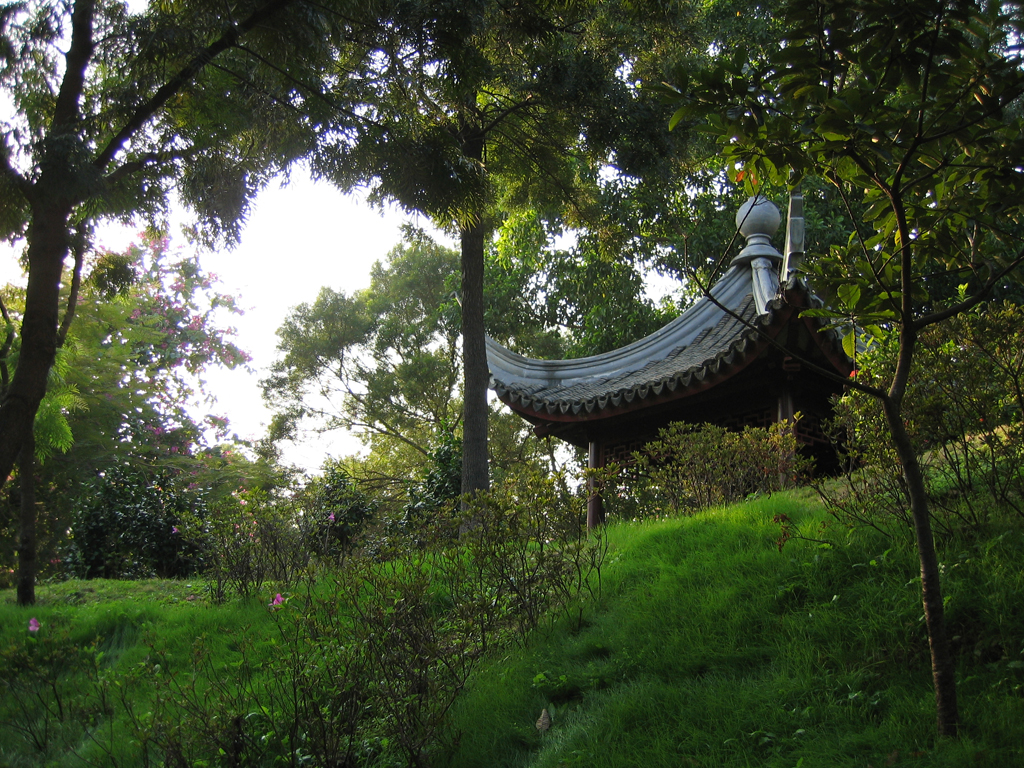
Chestnuts in Kowloon

Chestnuts in Kowloon

I have been to the Fragrant Harbor
far away,
where the people sounded like rain
upon the cobblestones,
and their laughter I called my own,
for once, for a little while
I was there

with you as we walked
past market stalls with the cackle
of hagglers
and scents of sesame and jasmine
filled the air,
we climbed tall buildings
and the peak of a mountain,
I was there

with you as we crossed the harbor
along with salt and seaweed,
by noon we reached Kowloon
famished,
and we shared a paper bag
filled with roasted chestnuts:
there by the lotus pond,
the moist white warmth and our dreams
fed our nameless hunger —

now the Fragrant Harbor awaits
far away,
but I am no longer there,
save the shriveled husks of chestnuts
we threw away so long ago
that for once, for a little while
burned among the coals.

by D. G. V. © 2012

Last Days of Summer


Last Days of Summer

Lemon scents linger
from blooms of white magnolia,
while a cool breeze tiptoes,
donned in ornate lace
into a summer dusk cathedral:
I hear the mellow sound of shaken leaves
upon their sun-tanned branches,
harp strings stroked by fingers
of the wind —

The purple grosbeak’s song endures
into the night,
nectared notes delight
as I revel in these ardent days
of crimson apples,
the primrose pulp of aubergine plums,
the musk-white fragrance of orange
blossoms,
the golden cloak of summer’s warmth
upon the vibrant flowers.

by D. G. V. © 2012

** photography by Roman Niku