
Category: Life
The Cross that Reconciles
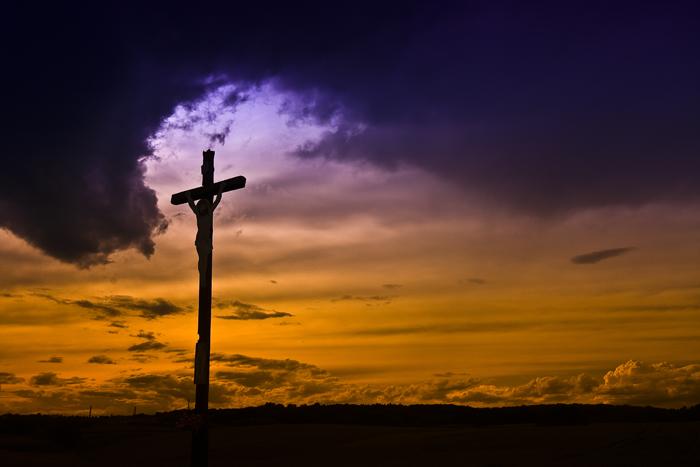
“For Christ himself has brought peace to us. He united Jews and Gentiles into one people when, in his own body on the cross, he broke down the wall of hostility that separated us.” Ephesians 2:14 NLT
A long time ago, a young man died a violent death, leaving His followers devastated. That young man was Jesus Christ, the Son of God, who rose triumphant from the grave, whose death on the cross is the only real hope for a lost and fallen humanity. In a world full of division, hatred and wars, it is the cross of Christ alone that can bring about true unity and peace among men.
Pride is at the root cause of these hostilities, and it takes many forms.
People take pride in their birth and race, deeming themselves superior to others who are not like them. There is also pride of possessing power which causes tension between the “haves” and the “have nots”, the employer and the employed, those who govern and the governed, among other things. There is pride of intellect which causes the separation between the “Greeks and barbarians”, the wise and the unwise, the educated and the uneducated.
Peace involves love, sympathy and understanding, but the world is incapable of producing true peace because the problem is in the heart of man, not his mind. Pride is a formidable power in this world, and none of man’s own inventions can deal with this problem.
The only thing in the world that can bring peace and unity among men and women is the cross of Christ. How is this accomplished?
First, the cross shows us the reality about ourself. We are prideful beings, thinking we are always right and it is always the other person’s fault. But the cross of Christ humbles us when we consider why Christ came into the world. He came because we cannot save ourself, He came “to save that which was lost”. The cross tells us that we are complete failures who have missed the mark, and that Christ came to die on the cross so that we can be made right with God.
Second, the cross reveals to us the truth about others. The cross shows us that other people also have souls, and that it does not matter what the color of their skin is, their economic status or level of education, we are all alike. We all have sinned and come short of the glory of God. We are one in sin, in failure, in hopelessness and helplessness.
The cross unites us in every respect. In our failure and helplessness, we receive the same forgiveness, being equally made the children of God, sharing the same divine life. We rejoice in the same Redeemer who has broken down the middle wall of partition between Jew and Gentile, who has torn down the barrier between us and our fellow human beings.
God forbid that we should boast about anything, except in the death on the cross of our Lord Jesus Christ.
* Reference: Martyn Lloyd-Jones, The Best of Martyn-Lloyd Jones, 1992, Baker Books, England, pp. 85-107
* Photography by Jean Winters Olkonen
The Narrow Gate that Leads to Life

“Enter by the narrow gate; for wide is the gate and broad is the way that leads to destruction, and there are many who go in by it. Because narrow is the gate and difficult is the way which leads to life, and there are few who find it.” Matthew 7:13-14
Jesus speaks about two divergent courses that a person can choose to follow in life: a wide gate leading to a broad pathway, and the other, a strait gate leading to a narrow and difficult path. The latter is symbolic of the Christian experience and way of life which the Lord Jesus Christ beckons us to follow.
This gate is a constricting entrance, an exclusive pathway from the very start, and a personal one. In its narrowness, certain things are to be left behind in order for one to pass on through.
The Christian is to leave behind the ways of the world, the outlook that ignores God, living a life based upon the whims and demands of this life alone. In leaving the worldly principle, the Christian finds himself as a unique, responsible being before God, confronting the issues of his life and his eternal destiny.
The Christian is to leave the old “self” outside the gate. He is to put off the old man and put on the new man, which after God is created in righteousness and holiness (Ephesians 4:22-24).
This gate is narrow because it is a difficult experience. The Christian life is not easy because it is too glorious and wonderful, in contrast to how effortlessly the ordinary can be attained. There are few who find and enter the exalted Christian life simply because it is a hard life.
The gate is strait because if truly lived, it involves suffering and persecution. The world has always been inclined to persecute the person who follows God. Jesus Christ Himself was rejected and persecuted by the world, hence the Christian must be ready to be misunderstood, because he has been set apart to follow Christ.
This gate leads to a path that continues to be narrow. The Christian life keeps on being difficult; it is a continuous “fight of faith” right to the very end.
But the narrow pathway leads to life, rescuing us from the path of destruction. It is the road trodden by Christ Himself, and it is our privilege to walk out of this world and enter into this life, following Him every step of the way.
** Reference: David Martyn Lloyd-Jones, “Studies in the Sermon on the Mount”, Martino Publishing, CT, 2011, pp. 217-228.
** Photograph: Gate in the Poppies by Evgeni Dinev
The Amazing Gift of Eternal Life

“And this is life eternal, that they might know thee the only true God, and Jesus Christ, whom thou hast sent.” John 17:3
Life in this world is temporary and limited, but there is a life different from the mere existence that most human beings can comprehend. It is an amazing life, and it can be said that the reason the Son of God came into the world was to offer this kind of life to those who believe in Him. It is the gift of a life that lasts forever, measured not simply by its duration, but by its intense and distinctive quality.
Eternal life brings us into fellowship with God. Into this life are given the exceeding great and precious promises of God, enabling us to be partakers of the divine nature (2 Peter 1:4). When we are born again through faith in Christ, we do not simply become “better persons”; we share and participate in the very life and nature of God: we are in God, and God is in us, a mystical conception and a reality that is staggering to the human mind.
It is a life of purpose, sharing in God’s interests and objectives, whereby we become partners in God’s great plan of salvation for the world. We feel God’s grief over sin and see evil as a real force that manipulates the lives of mankind in their enmity against God. Hence we live to push forward the kingdom of light against the kingdom of darkness.
God becomes very real to us. We are steadily aware and certain of His presence. It is a life of communion with God and knowing Him as our Father, recognizing that we are never alone because God is constantly with us and that our lives are in His hands.
Eternal life is knowing God. What could be more amazing than that?
* Reference: Martyn Lloyd-Jones, Fellowship With God, Crossway Books, Wheaton, Illinois, 1993, pp. 56-85
* Photography: Sunrise by Knowles Gallery @ Flickr cc
 lilies, sparrows and grass
You must be logged in to post a comment.