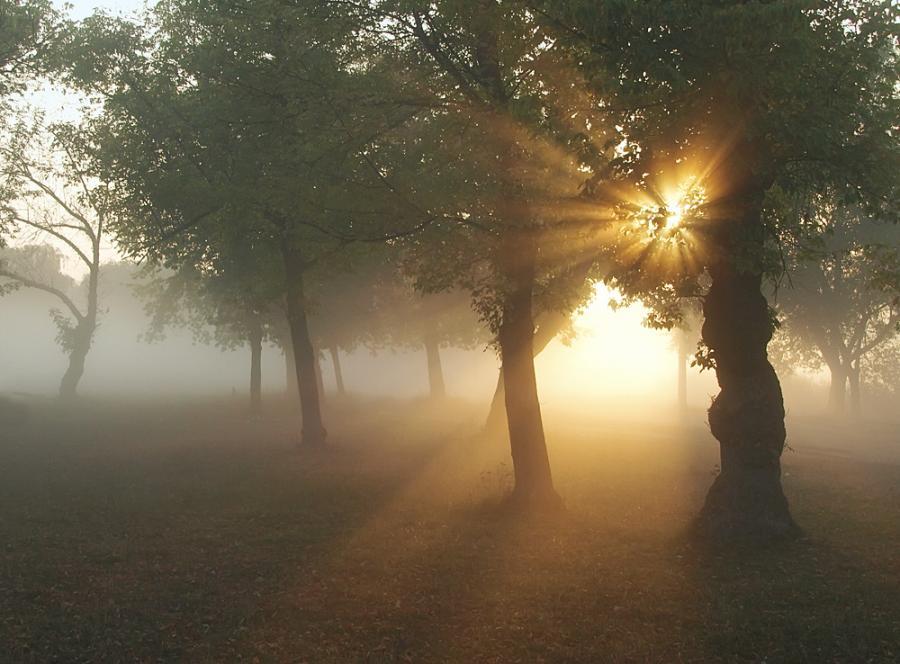

“Twilight and White Linen”


Twilight and White Linen

Here we are and time
forsaken
when I found you—

latitudes of faces,
provinces
of eyelids and shoulders,
verdant archipelago
sculptured in sapphire
oceans,
the orbital fruit dangles,
suspended
from its ripening—

Twilight and white linen
stoke the hunger—

I slice zucchini
into cylinders,
slender wedges,
peppers into strips
of scarlet,
toss the cuttings
into volcanic oils of olive,
aromatic sesame—

the meat is warm
for the tasting,
pearls of rice turn amber
from the fragrant
spices—

here we are
and time.

by D. G. Vachal © 2013

*** Image by Rob Espierre

“Love’s Justice”

Return of the Prodigal Son by Bartolome Esteban Murillo 1667-1670


Love’s Justice

Is love inconsistent with justice in our human interactions?  At times we hear the words “tough love” uttered by parents who wish to instill in their children some important life lesson, and often there is a struggle in determining a clear set of determining principles as to how this process is to be carried out.

Jesus tells a story about a father and his two sons.  One son was dutiful and stayed home to work for his father.  The other was rebellious: he demanded his inheritance upfront, went to a far country, and spent all his resources on riotous living.  When his money ran out, and he recognized the error of his ways, he repented and journeyed back home, hoping he would find work as one of his father’s servants.

But instead of giving a scathing rebuke for all that the wayward son had done, the father adorned his son with the best robe, put a ring on his finger, and sandals for his feet.  Then he ordered the fatted calf to be killed, and a feast prepared.  The dutiful son was terribly upset at his father’s actions towards his long-lost brother.  He refused to join in the feast and stayed outside in the darkness of his own creation — the darkness of a harsh spirit and a lack of love for his sibling.

A strange story perhaps,  for there was no logical and expected justice served to the wayward son, but a total reversal of expected outcomes: the obedient son is standing outside in darkness, while the rebellious son is reveling inside the house, feasting with his father.

What then, becomes of justice in this story?  Jesus gives the assurance that Love is the only real justice, for the main purpose of justice is not punishment, but reclamation. A justice that is truly enlightened is less concerned with the punishment of wrong than its reparation.

Had the father issued a harsh verdict against the prodigal son, coldly dismissing him, he would have been unjust to his son’s future potential, and thus would have sinned a more grievous sin against his own son.  The worst sinner in the story was the son who did everything right, and yet acted in a vile, censorious, loveless way towards his brother.

One who does not love cannot be just.

God is Love, and God’s forgiveness is God’s justice, for if we acknowledge the error of our ways, and head back home to Him, He is faithful and just to forgive us our shortcomings, and to restore us into fellowship with Him, our Heavenly Father,  through His Son Jesus Christ.

References:
* William J. Dawson, “The Empire of Love”, New York: Fleming H. Revell Company, 1907, pp 33-44.
* Luke 15: 11-32, King James Version

“The Warmth of Scarlet Oceans”

KONICA MINOLTA DIGITAL CAMERAThe Warmth of Scarlet Oceans

Let the gelid evening thaw
in the warmth of scarlet oceans
fathomless
beneath my skin,
for I hold in my tiny hands
a chalice
of burgundy wine,
and the spicéd fragrance of roses
coalesces
with the golden tallow of candles
effulgent
in their stalwart flames —

I am not afraid
of the cold.

by D. G. Vachal © 2013

Image:  Wikimedia Commons

The Years, My Friend

Winter by Farhad
The Years, My Friend

The years, my friend, have not been kind
upon your marble face,   I hear the river songs
tinkle with the cymbals,
your eyes are shriveled grapes upon the vine,
your mouth a wounded cherry,
pecked reddish-grey
by restless robins.

Take my hand, my friend,
let us go to the calling fields that blaze with diamonds
under the eternal skies,
to the orchards in the midst of these winter days,
where leafless branches stand dauntless
in the endless cold, with jubilant tales to tell
in the blizzard of their days —

harken to the legends
of the root and the bud and the sun,
and the promise
(believe the promise)
that warmth and springtime
will come,
(it always comes)
once again.

by D. G. Vachal © 2013

*** Photography by Farhad