
Where to Start When Trials Arise

“The Lord is my light and my salvation; whom shall I fear? the Lord is the strength of my life; of  whom shall I be afraid?” Psalm 27:1

There is a strategy, a great principle for facing the battles and conflicts of life in the 27th psalm, condensed by Dr. Martyn Lloyd-Jones in the following words:  “Always start with heaven and with God, and then come down to face the problems on earth, as you find them in the light of what you have already seen through God’s light”.

Never start with man, never begin with an earthly perspective. Many failures are the result of starting at the wrong place to find a solution.

Why do we start with God?  The first thing we notice in the first few verses is the psalmist’s overwhelming confidence and assurance, not in himself, but in God.  Let us consider the reasons for this unshakable certainty.

The Lord is his light. Light is the opposite of darkness and despair, and in the light, we see things  clearly. When we are in the midst of trials, we grope in darkness:  we have limited understanding, and we blindly grapple for human solutions. But we can look up to heaven and to God for light and understanding, for the Lord shows us another way, another kind of life, a way out of darkness. For He Himself is the light in the person of the Lord Jesus Christ who proclaimed, “I am the light of the world: he that follows me shall not walk in darkness, but shall have the light of life.” John 8:12

The light of life.  The radiance that illuminates our pathways as we live our lives on earth. What a tremendous promise and assurance!

The Lord is his salvation.  When we turn to God, He guarantees our welfare, by showing us the way of escape.  Through Christ, God delivers us out of the kingdom of darkness and translates us into the kingdom of light.  It is a glorious transformation: despite the presence of sufferings, we are rescued out of the stronghold of tyrannical darkness, in understanding and in spirit, and we are elevated to a position of peace, strength and safety.

The Lord is the strength of his life.  In spite of the formidable forces of the enemies of our life and our soul , when we look to God and rely upon Him, we have the confidence of a limitless Power behind us, Whose strength and resources are boundless.

As we look to the Lord before anything else, in whatever circumstance we are in, we ultimately acknowledge Him to be our light, our strength and our salvation.  And from this principle flows the wellspring of our confidence and assurance in the face of trials, even at their very worst.  Whom then shall we fear, and of whom shall we be afraid?

1 Reference: Dr. Martyn Lloyd-Jones Sermon, “Seek My Face”

How Faith Overcomes

“ For whoever is born of God overcomes the world: and this is the victory that overcomes the world, even our faith.” I John 5:4

Faith is the victory that overcomes: what an astounding tautology put forth by the Apostle John! Certainly a lofty concept, but let us consider how our faith in Christ makes overcoming the world a practical and actual possibility.

First, believing that Jesus Christ is indeed the Son of God gives us the capacity to rest upon the power and ability of Christ, the One who conquered death and is alive forevermore.

“The name of the Lord is a strong tower; the righteous run into it and are safe” 1 Just as men of old ran to the tower to seek safety from their enemies, in the simplicity of our faith, we run to Christ, use His powerful name, hide in Him in a literal sense for protection, defense, and deliverance. We rely utterly upon Him. This is what is called “the great strategy of faith”, the assurance of the possibility that is open to us, that we can go to Christ directly, immediately, and simply look to Him and rest in Him. And when the battle rages on and we feel that we are at the point of falling, we simply cry “Jesus”, and believe and know that He is at hand to deliver and protect us.  As little children, we do not look at the enemy, but simply rely upon Him.  Victory is in Him, in His power, and not in ourselves.

Second, we use faith in an active sense.  We deliberate upon the Christian gospel and ponder what faith in Christ really means in terms of this fight we face against the world, the flesh and the devil.  We consider Jesus Christ in relation to this battle: that He took upon the likeness of sinful flesh because of the power of Satan, of sin and of evil, that He came because He is the only way by which we could be delivered from these overpowering forces. And in His life, death and resurrection, Christ overcame these powers.

As we see ourselves belonging to Christ, we realize that we share in His victory and everything that belongs to Him. Our whole perspective towards this fight changes: because Christ has overcome the world, and because we are in Him, then we have overcome.  In a practical sense, being in Christ enables us to see that we can literally draw strength and power from Him and from His fullness; we have inexhaustible resources behind us, we have a source of supply that can never fail. There is absolutely no limit to the power of Christ.

And in our human frailty, when we sin and fall back, there is forgiveness in Christ. There is nothing that so enables us to overcome as this deliverance from our sins and failures, the freedom from that overwhelming sense of despair, so we can arise again and continue our journey through life.

Lastly, faith enables us to behold the ultimate glory and perfection that await us.  Our hearts are encouraged though the fight may seem arduous and endless.  Faith makes us realize that Christ, who died for us and sustains us in this world, will one day present us faultless before the presence of God with exceeding joy.

And this is the victory that overcomes the world, even our faith.

*** 1  Proverbs 18:10

***Reference:  Martyn Lloyd Jones, Life In Christ, Crossway Books, Wheaton Illinois, 2002, pp. 604-613.

*** Photo: Elie Tower by Dimitri


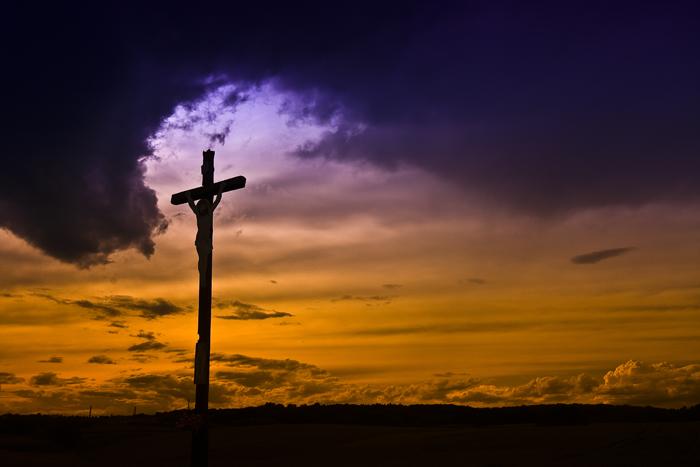
The Cross that Reconciles

“For Christ himself has brought peace to us. He united Jews and Gentiles into one people when, in his own body on the cross, he broke down the wall of hostility that separated us.” Ephesians 2:14 NLT

A long time ago, a young man died a violent death, leaving His followers devastated.  That young man was Jesus Christ, the Son of God, who rose triumphant from the grave, whose death on the cross is the only real hope for a lost and fallen humanity.  In a world full of division, hatred and wars, it is the cross of Christ alone that can bring about true unity and peace among men.

Pride is at the root cause of these hostilities, and it takes many forms.

People take pride in their birth and race, deeming themselves superior to others who are not like them.  There is also pride of possessing power which causes tension between the “haves” and the “have nots”, the employer and the employed, those who govern and the governed, among other things.  There is pride of intellect which causes the separation between the “Greeks and barbarians”, the wise and the unwise, the educated and the uneducated.

Peace involves love, sympathy and understanding, but the world is incapable of producing true peace because the problem is in the heart of man, not his mind. Pride is a formidable power in this world, and none of man’s own inventions can deal with this problem.

The only thing in the world that can bring peace and unity among men and women is the cross of Christ.  How is this accomplished?

First, the cross shows us the reality about ourself.  We are prideful beings, thinking we are always right and it is always the other person’s fault.  But the cross of Christ humbles us when we consider why Christ came into the world.  He came because we cannot save ourself, He came “to save that which was lost”.  The cross tells us that we are complete failures who have missed the mark, and that Christ came to die on the cross so that we can be made right with God.

Second, the cross reveals to us the truth about others.  The cross shows us that other people also have souls, and that it does not matter what the color of their skin is, their economic status or level of education, we are all alike. We all have sinned and come short of the glory of God. We are one in sin, in failure, in hopelessness and helplessness.

The cross unites us in every respect.  In our failure and helplessness, we receive the same forgiveness, being equally made the children of God, sharing the same divine life. We rejoice in the same Redeemer who has broken down the middle wall of partition between Jew and Gentile, who has torn down the barrier between us and our fellow human beings.

God forbid that we should boast about anything, except in the death on the cross of our Lord Jesus Christ.

* Reference:  Martyn Lloyd-Jones,  The Best of Martyn-Lloyd Jones, 1992, Baker Books, England, pp. 85-107

* Photography by Jean Winters Olkonen

The Narrow Gate that Leads to Life

“Enter by the narrow gate; for wide is the gate and broad is the way that leads to destruction, and there are many who go in by it.  Because narrow is the gate and difficult is the way which leads to life, and there are few who find it.”  Matthew 7:13-14

Jesus speaks about two divergent courses that a person can choose to follow in life: a wide gate leading to a broad pathway, and the other, a strait gate leading to a narrow and difficult path.  The latter is symbolic of the Christian experience and way of life which the Lord Jesus Christ beckons us to follow.

This gate is a constricting entrance, an exclusive pathway from the very start, and a personal one. In its narrowness, certain things are to be left behind in order for one to pass on through.

The Christian is to leave behind the ways of the world, the outlook that ignores God, living a life based upon the whims and demands of this life alone.  In leaving the worldly principle, the Christian finds himself as a unique, responsible being before God, confronting the issues of his life and his eternal destiny.

The Christian is to leave the old “self” outside the gate.  He is to put off the old man and put on the new man, which after God is created in righteousness and holiness (Ephesians 4:22-24).

This gate is narrow because it is a difficult experience. The Christian life is not easy because it is too glorious and wonderful, in contrast to how effortlessly the ordinary can be attained. There are few who find and enter the exalted Christian life simply because it is a hard life.

The gate is strait because if truly lived, it involves suffering and persecution.  The world has always been inclined to persecute the person who follows God. Jesus Christ Himself was rejected and persecuted by the world, hence the Christian must be ready to be misunderstood, because he has been set apart to follow Christ.

This gate leads to a path that continues to be narrow. The Christian life keeps on being difficult; it is a continuous “fight of faith” right to the very end.

But the narrow pathway leads to life, rescuing us from the path of destruction.  It is the road trodden by Christ Himself, and it is our privilege to walk out of this world and enter into this life, following Him every step of the way.

** Reference: David Martyn Lloyd-Jones, “Studies in the Sermon on the Mount”, Martino Publishing, CT, 2011, pp. 217-228.

** Photograph: Gate in the Poppies by Evgeni Dinev

Worry: Its Causes and Solutions


“Take therefore no thought for the morrow: for the morrow shall take thought for the things of itself. Sufficient unto the day is the evil thereof.” Matthew 6:34

Worry is a problem brought about by our relationship to the things of this world and of this life. It does not matter whether one has an abundance of worldly goods, or the lack of it, both conditions lead to worry; no one is immune from this vexation.

Worry can be considered as a failure to apply our faith; however, delving further into this problem reveals that worry is in itself a definite entity, a tremendous power that grips and takes control of us. It is an active force, and failure to recognize this facet can lead to defeat. It is almost similar to a personality that takes hold of us, in spite of ourselves, and keeps arguing with us. It leads to this curious perverse condition where one almost does not want to be delivered from it. Worry has an active imagination; it can conceive all sorts of strange eventualities and possibilities and by its power, transports us into the future, making us troubled by things that are purely imaginary.

How can we address worry?

First, consider what the Lord said about the folly of being anxious: worrying about the future is utterly useless because it achieves nothing; it is a pure waste of energy, and its threatened calamities are hypothetical, uncertain, and may not happen at all. Moreover, the result of worrying about the future cripples us in the present; we hamper our effectiveness today, and therefore diminish the totality of our effectiveness with regard to the future.

Second, Jesus says every day must be lived in and of itself, as a separate unit. Each day has a quota of problems; we must not add tomorrow’s quota to today’s, or it would be too much for us. We are to live each day to the maximum.

Third, just as we compartmentalize our lives into each twenty-four hour period, we are to apportion our whole relationship to God in the same manner. Oftentimes we fall into the jeopardy of believing God for the whole of our lives, but not believe Him for the particular segments in our lives. We must learn to walk with God daily, rely on Him daily, and take things to God as they arise.

Fourth, we are to apply our faith. Just as the psalmist talked to himself and reasoned with himself, we are to talk to ourselves and to our faith; we shake and remind ourselves about our faith in God. Furthermore, a large part of faith is just rejecting anxious thoughts, refusing to be burdened by worry because we have cast our burden upon the Lord.

May the Lord give us the wisdom and grace to carry out these principles to cease from worrying, enabling us to rejoice in Him every day of our lives.

*** Reference: David Martyn Lloyd-Jones, “Studies in the Sermon on the Mount”, Martino Publishing, CT, 2011, pp. 146-157.

*** Photograph: Storm Watchers by Jean Winters Olkonen