Category: Life
“The Root of the Righteous”

The Root of the Righteous
… a synopsis of A. W. Tozer’s writing
We have often heard the riddle, “What comes first, the chicken or the egg?” Perhaps analogous to this enigma is the question, what is more important, the root or the fruit? Inasmuch as the fruit bears the seeds for the propagation of similar plants, what then, is the significance of the root, that structure which is oftentimes beneath the ground, hidden from plain sight?
In applying this analogy to the cultivation of our Christian faith, it seems that in modern times, many are enamored with outward appearances, with the fruit of the tree, whereas in the olden days, our fathers were more concerned with the root of the matter. “Our fathers looked well to the root of the tree and were willing to wait with patience for the fruit to appear. We demand the fruit immediately even though the root may be weak and knobby or missing altogether.” (1)
God’s Word tells us that “the root of the righteous yields fruit” (Proverbs 12:12). The fruit springs from the root, for the root is the source of sustenance and growth. Listen to the lament of a few righteous men, that much that passes for Christianity today is the “brief bright effort of the severed branch to bring forth its fruit in its season.” But the laws of life and nature are against it. There is no lasting fruit and viable growth apart from the root.
We must consider the root first; we must go back to the grass roots: to open our hearts and search the Scriptures; to bear our cross, follow our Lord, and pay no heed to every passing and momentary religious vogue.
How do we cultivate the root?
One way is that we must give time to God. One of the most persistent problems found among Christians is retarded spiritual progress. Many find themselves no further along than when they first came into the faith. There are many explanations to this, but there is one universal reason that may easily be the main cause: the failure to find time to the cultivation of the knowledge of God.
The distractions of the age have never been more bewildering than in the present time, with the overwhelming advance of technology, and the introduction of props and paraphernalia to amuse and entertain: that sweep the human mind and soul out of the place of communion with God. But if we are wise, we will resolutely put these aside and make room for the King, and take the time to entertain Him. We can neglect certain things with minimal loss, but to neglect communion with God comes at a very high cost, at the peril of the well-being of our very own souls.
We must give time to God.
Reference: A. W. Tozer, “The Root of the Righteous”, Wing Spread Publishers, Camp Hill, Pennsylvania, 2006, pp. 3-9. Footnote: Ibid., p. 3.
“Before Night Falls”

Before Night Falls
Purpureal murmurs,
gasps of pink,
orderly scribbles
of wind-swept boughs
scatter chantilly lace
against a silken
sky —
Woman:
wear the fragile veil
upon your crown,
tread softly into the twilight
cathedral,
illuminate
the candles,
sing
like the nightingale
before the darkness
falls.
By D. G. Vachal © 2012
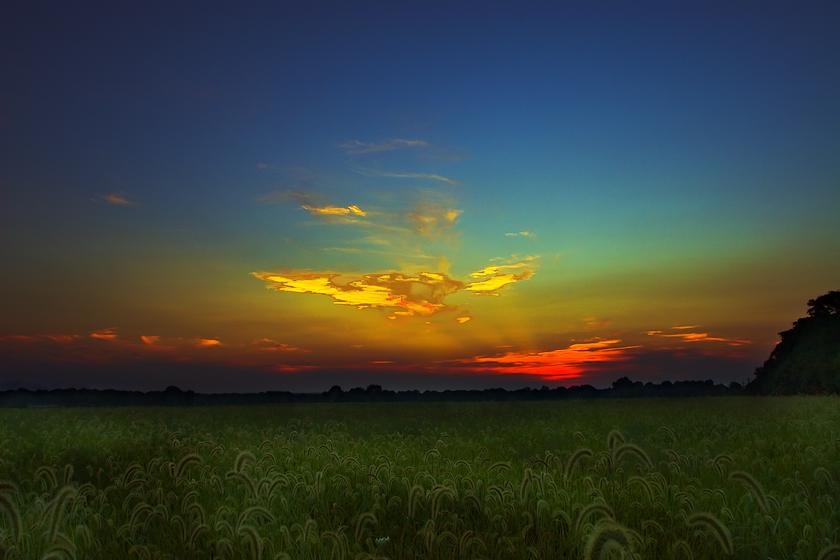
*** Photography by Franzengel
Protected: Infinitely Green
“Where is Your Faith”?
“Where Is Your Faith?”
“And they came to him, and awoke him, saying, Master, Master, we perish. Then he arose, and rebuked the wind and the raging of the water: and they ceased, and there was a calm. And he said unto them, Where is your faith? And they being afraid wondered, saying one to another, What manner of man is this! for he commands even the winds and water, and they obey him.”
Luke 8:24-25
The Gospels talk about a great storm that arose while Jesus and His disciples sailed across the Sea of Galilee. After being awakened by the terrified men, Jesus rebuked the wind and the raging waters, and immediately, there was a great calm.
Jesus was astonished at the state of mind of His disciples in the midst of the storm: He asked them one pointed question: “Where is your faith?” The Lord’s question seems to imply that He knows they have got faith, but where was it at the moment? And this question gives us a key to understanding the nature of faith.
Faith transcends ordinary human reaction, and hence it is not automatic, nor is it a result of reflex thought or action; it is not a matter of feelings alone, but encompasses the whole person, which includes the mind, intellect and understanding. Faith is an activity that must be consciously put into operation. It is a response to truth.
How do we put faith into practice?
The first thing we must do when we find ourselves in extreme difficulty is to refuse to allow ourselves to be controlled by the situation at hand. Faith is a refusal to panic. The disciples panicked in the storm, with the cold, strong winds tossing their craft, the waters flowing in, and they thought they were going to drown and perish. They allowed their predicament to control them, instead of applying their faith and taking charge.
The second step to applying faith is to remind ourselves as Christians of what we believe in and what we know. If the disciples had only considered that Jesus was with them, the same Jesus who turned the water into wine, healed the blind and the lame, raised the dead, fed thousands, and performed many other miracles, they would not have feared. Faith grasps on to the truth and reasons what it knows to be truth.
But there is value even in the weakest faith. With their little faith, the disciples did the right thing in the end. They eventually went to Jesus, knowing that He was able to do something about the threatening situation at hand.
Each of us has been given a measure of faith, and should we find ourselves in the midst of trials and testing, let us take it as an opportunity to put our faith into action, to make our faith clearly manifest, to bring glory to our Lord, as we live our lives on earth.
Reference: D. Martyn Lloyd-Jones, Spiritual Depression, Lowe and Brydone Printers, Ltd, Glasgow, Great Britain, 1965, pp. 134-147.
Image: Christ on the Sea of Galilee, Painting by Eugene Delacroix, circa 1854, in the public domain, courtesy of Wikipaintings.org

You must be logged in to post a comment.